Giving users control, on purpose
A behavioural-science hypothesis, a three-week experiment, and a result nobody predicted: letting users choose their own difficulty barely moved retention, but it moved conversion hard — especially with the audience we expected to care least.
The situation
NeuroNation's founders were part of Google's 2019 Sustainable Engagement Forum, a cohort of product teams sharing ways to apply behavioural economics to engagement. It gave us the excuse to run a real test on our own flagship brain-training app rather than just talk theory. I conceptualised the feature, spec'd the MVP, and analysed the results in Amplitude against retention and conversion.
The theory, briefly
Self-determination theory holds that people have three core psychological needs — autonomy, competence, and relatedness — and that meeting them drives more sustainable motivation than external rewards alone. In product terms, we talk constantly about personalisation: using data to surface the best thing for a user. We talk far less about something simpler — giving users the decision itself. Autonomy, not just relevance.
NeuroNation needed users to build a frequent habit to see results. The training programme itself was already determined by assessed strengths and available time. My question was narrower: would giving users control over one part of that programme make them more likely to keep coming back?
What we built and tested
Hypothesis: giving users more autonomy over their training difficulty increases intrinsic motivation to continue, measured by return rate on day 3, 7, and 14.
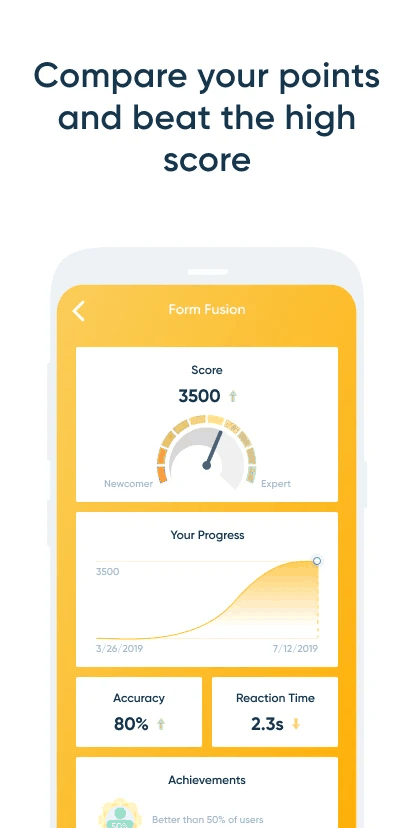
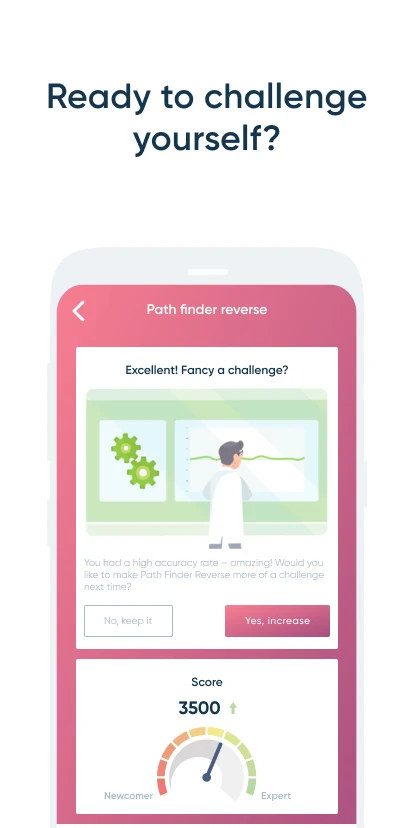
We used exercise difficulty as the lever. Score in the top percentile on an exercise, and you'd unlock the option to raise the difficulty next time — both a reward for performing well and a reason to come back. Score lower, and you could choose to ease the difficulty instead, letting users self-select a level of challenge that felt right rather than one imposed on them.
The result nobody expected
We ran the test for three weeks, measuring day-14 retention. Retention barely moved — a slight increase, not statistically significant. But conversion — free users upgrading to a paid subscription during the test window — moved substantially. Over-30s converted 14% more. Under-30s, an audience that historically converted far worse (the common assumption being that younger users don't see brain training as necessary), converted 30% more.
Qualitative feedback backed up the number: users specifically valued being able to decide difficulty for themselves. The feature stayed, and became one of NeuroNation's core selling points. The theory predicted a retention story; what we actually got was a lesson in how much perceived autonomy is worth at the point of conversion, even when its effect on long-term habit is limited.