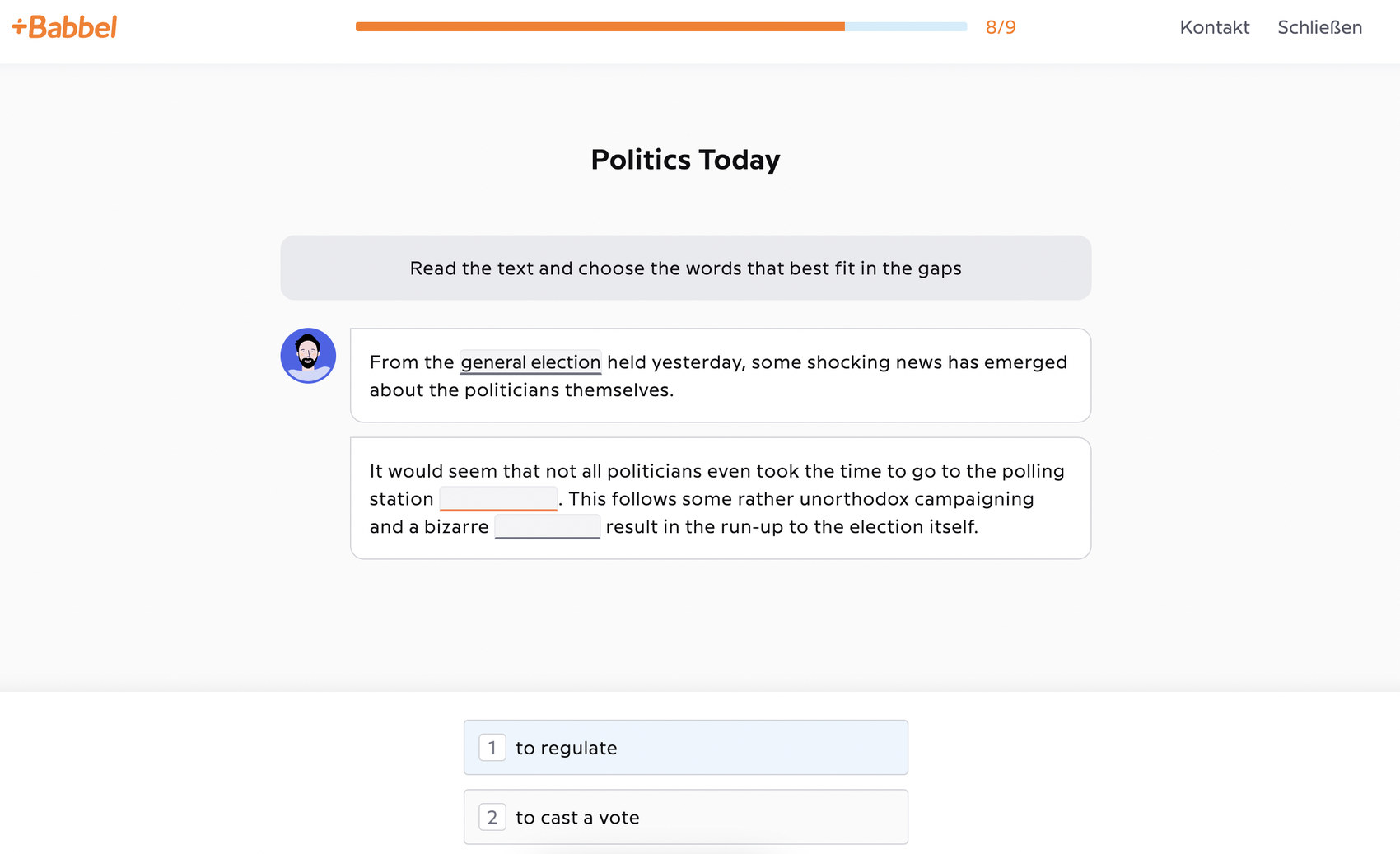
Designing for a level Babbel didn't teach yet
Babbel's own users kept outgrowing it — the platform's course levels stopped well short of advanced. I designed a course concept to test what advanced content could look like: monolingual, immersive, and built around genuinely adult topics like discussing politics.
The situation
Babbel's structured courses are genuinely good at getting someone from zero to conversational — but at the time, its levels stopped short of true advanced content, which meant Babbel's own success story was also its churn risk: the learners who improved fastest eventually outgrew the product entirely. I set out to design a course concept that explored what advanced content could actually look like on Babbel, rather than assuming the existing lesson format would simply scale up with harder vocabulary.
Advanced means monolingual
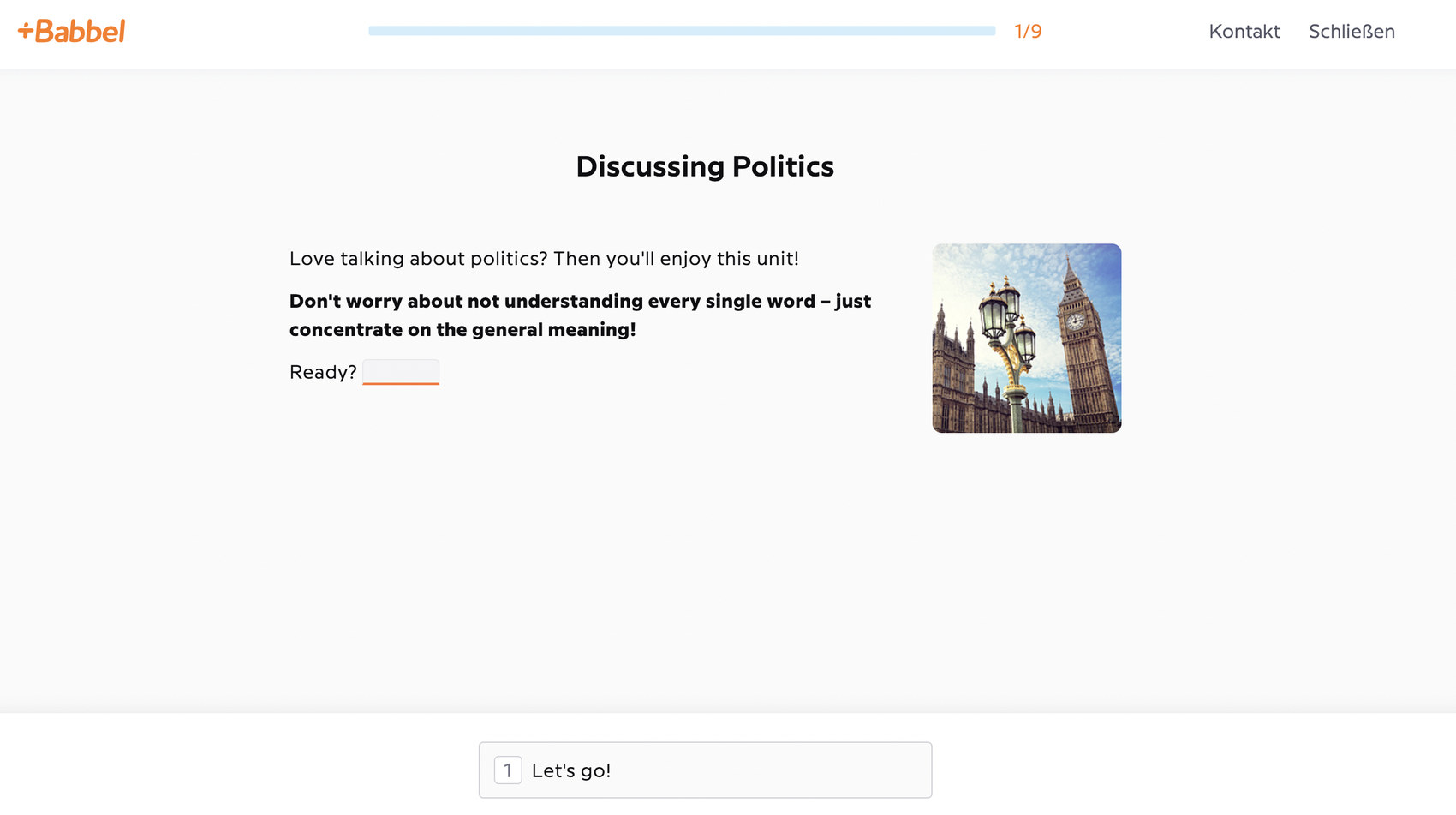
Most Babbel lessons lean on the learner's native language to explain new material. That's exactly the crutch an advanced learner needs to lose. So the concept dropped translation entirely: instructions, explanations, and feedback all stayed in English, and the unit said so upfront — setting expectation rather than letting learners discover the harder format mid-exercise and assume something was broken.
A genuinely adult topic
The concept picked "Discussing Politics" deliberately. Advanced learners aren't beginners who need bigger vocabulary lists — they're adults who want to talk about the things adults actually talk about. That meant writing vocabulary and dialogue around real political concepts, not sanitised classroom small talk.
Layering comprehension without translation as a safety net
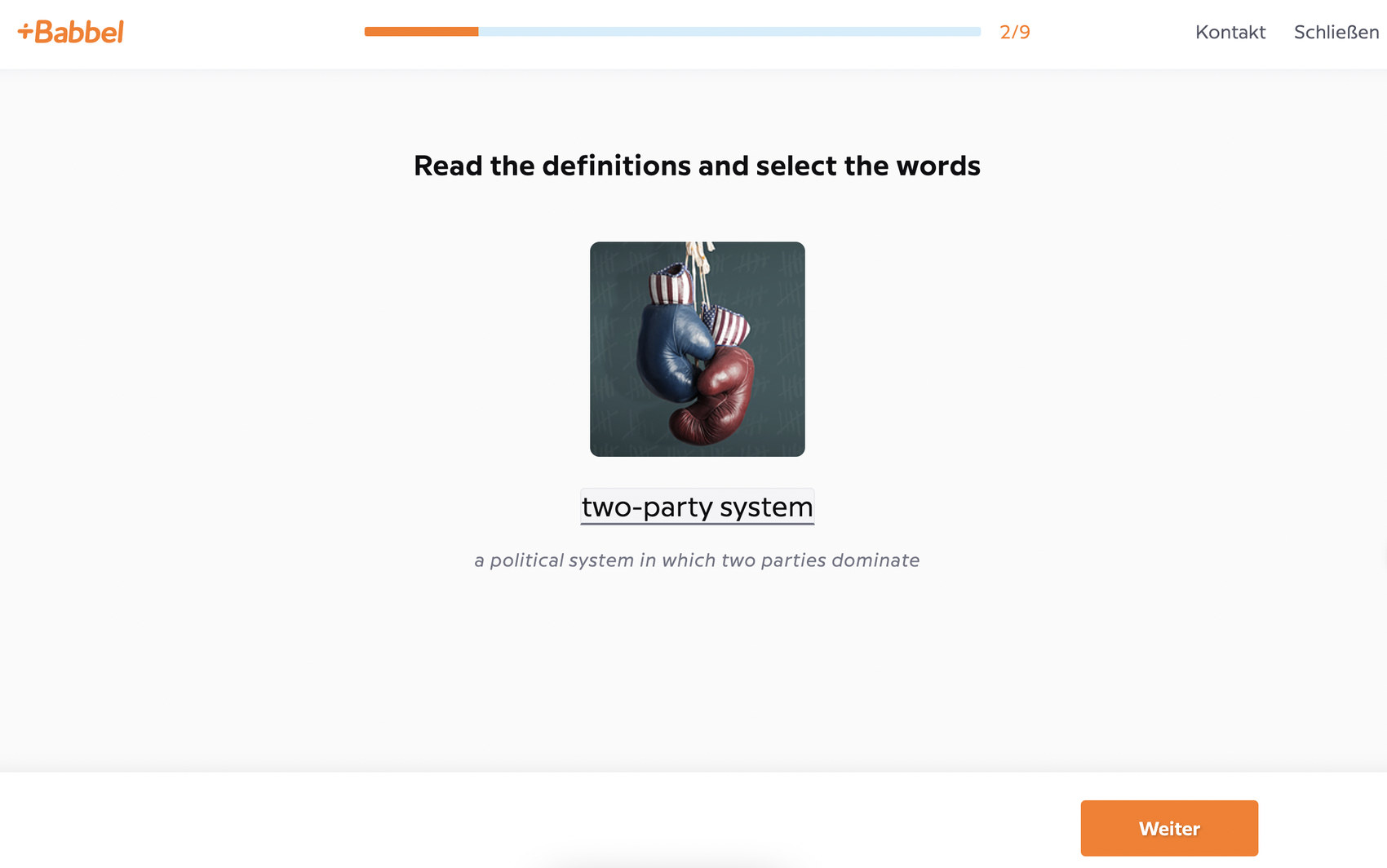
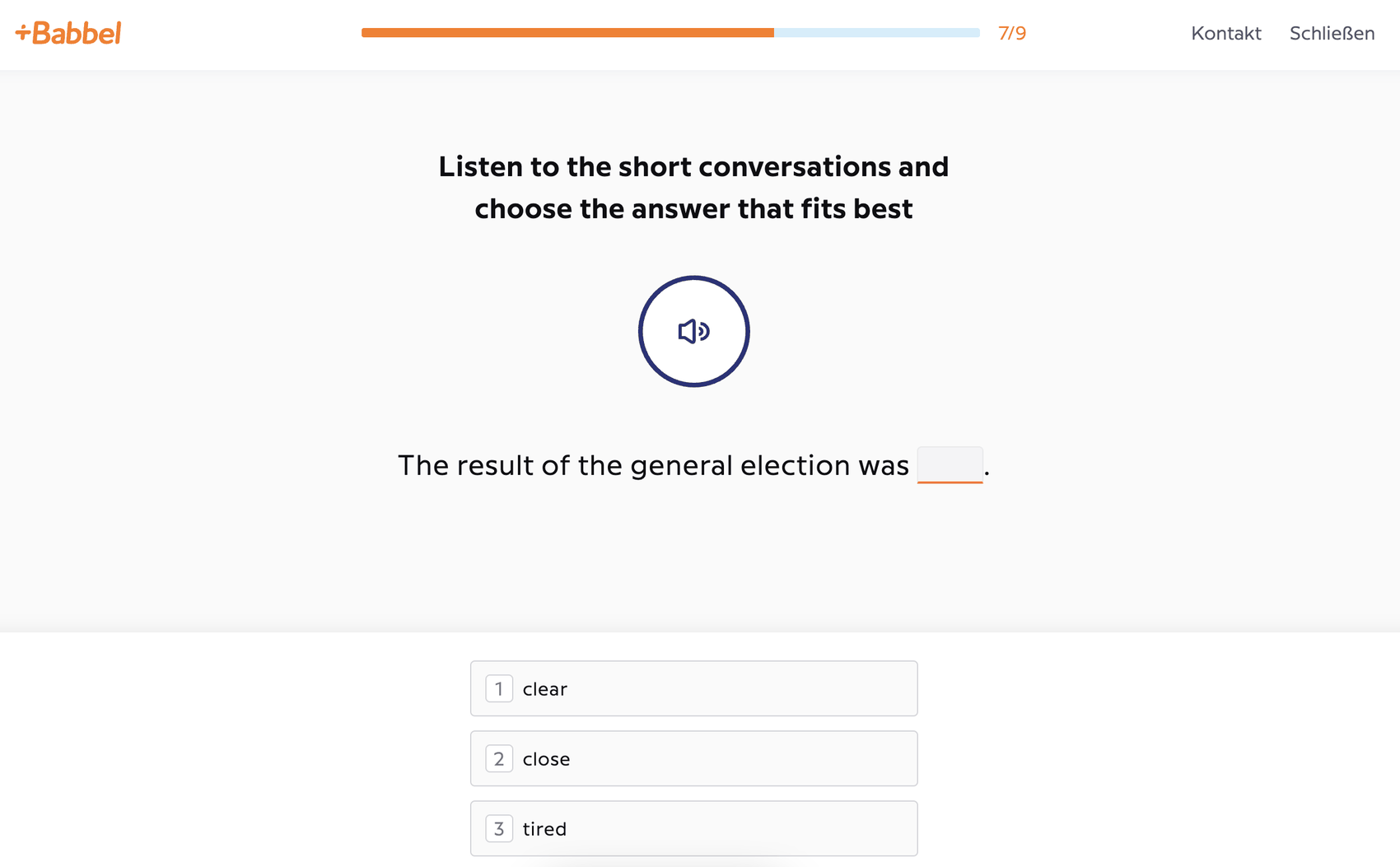
Without translation to fall back on, every other exercise had to do more work to build and check comprehension. The unit layered several distinct formats across its nine steps: audio dictation on target vocabulary, listening comprehension against short conversations, and inline contextual notes that explained idioms in English rather than defining them word-for-word.

Bringing it together in dialogue
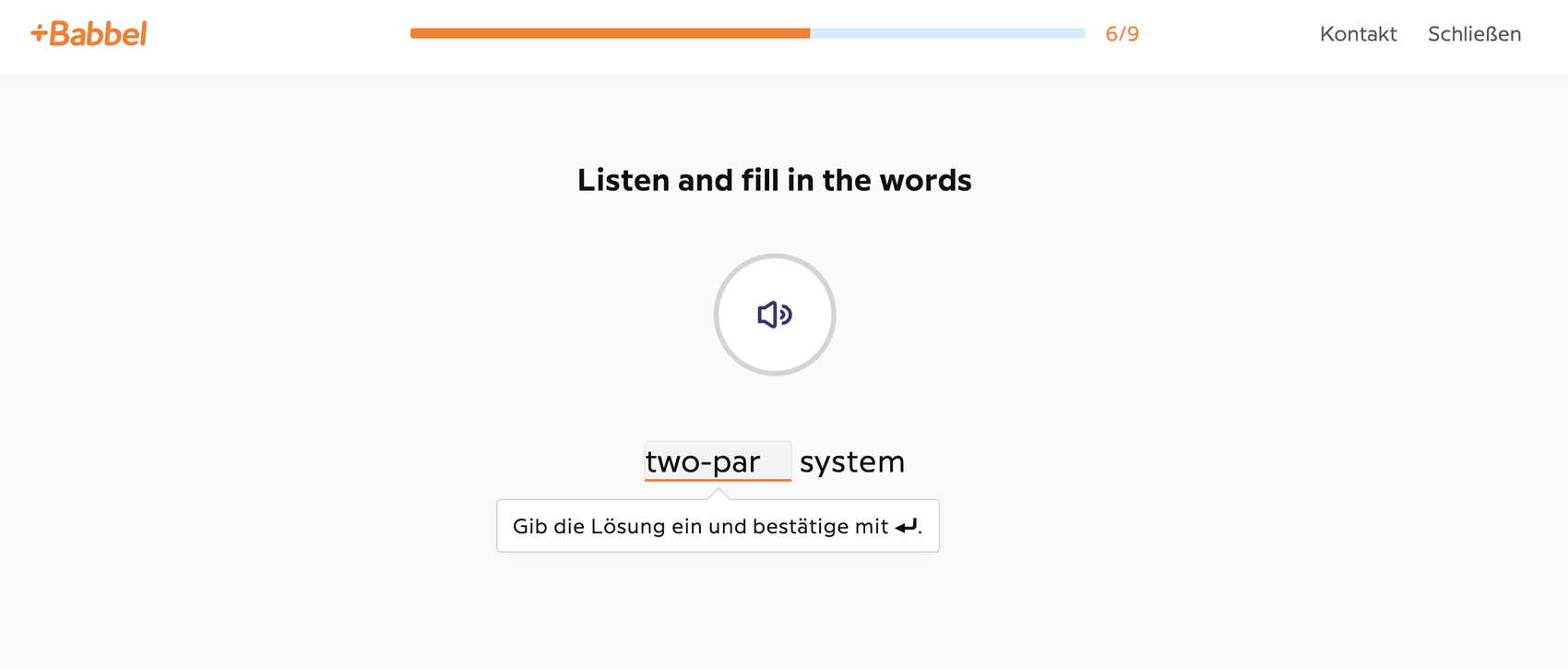
The unit closed with a longer dialogue exercise, styled as a news segment, that asked learners to read for gist first — the same instruction from the intro screen, now actually being tested — before filling gaps that required genuine comprehension of the surrounding sentence, not just pattern-matching to a vocabulary list.